
The rise of the far right across Europe has renewed questions about the relationship between memory culture and nationalist mobilization, questions with which other regions, particularly the Balkans, have long been familiar. A substantial body of scholarship on the “memory wars” in the former Yugoslavia has examined the tensions between globally promoted models of remembrance and their local appropriations and contestations.
This round table revisits key concepts and assumptions within the broader field of what Astrid Erll called “utopian memory” and its focus on critical, reflexive accounts of the past. Particular attention will be given to the so-called “German model” of dealing with the past, and its emphasis on acknowledgment of responsibility for mass atrocities, war crimes trials, apologies, and recognition of civilian victims.
The attempts to preserve established canons of memory are increasingly confronted with revisionist trends, pushing simultaneously for more and less critical memory. Under the guise of anti-anti-fascism, historical revisionism increasingly seeks to rehabilitate fascist past while equating it with the communist anti-fascism. At the same time, human rights and leftist activists call for the unconditional global application of the “German model”. At the European scale, initiatives promoting a shared “European memory” based on reconciliation and common historical narratives are increasingly contested from the right, which promotes a shared cultural heritage and a sense of belonging to European civilization.
This round table addresses the contested field of memory cultures, additionally complicated with the use of social media and AI, asking about the global travels of the “German model” and its local contestations in various regional memoryscapes. The discussion brings together memory scholars who have published widely on topics of memory, dealing with the past and memory wars, to critically reflect on the future of (normative) memory studies in an increasingly polarized political landscape.
Jasna Dragović-Soso is currently Visiting Professor at LSEE Research on Southeast Europe at the Hellenic Observatory Centre for Research on Contemporary Greece & Cyprus, LSE, and incoming Director of the School of Slavonic and East European Studies, University College London. She has written extensively about memory politics, transitional justice, nationalism, state disintegration and international intervention, with a focus on the former Yugoslavia and the Western Balkans, and is currently writing a book about truth commission initiatives and memory politics in the post-conflict Balkans and co-editing the Brill Handbook on Memory Studies in Southeastern Europe. She is the author of ‘Saviours of the Nation’: Serbia’s Intellectual Opposition and the Revival of Nationalism (Hurst and McGill Queen’s University Press, 2003). She is co-editor of the Palgrave book series on Memory Politics and Transitional Justice and a member of the editorial board of the journal History & Memory.
Noam Tirosh is Head of the Department of Communication Studies at Ben-Gurion University of the Negev. His research focuses on the intersections of media, memory, and human rights, with particular attention to the concept of the “right to memory”. He is co-editor (with Anna Reading) of The Right to Memory: History, Media, Law, and Ethics (2023). He is a recipient of the Israel Communication Association’s 2017 Outstanding Book of the Year Award. He has covered topics such as refugees and asylum seekers, Jews deported from Arab countries, the memory rights of the Palestinian minority in Israel and more. His work examines memory activism, digital and post-digital memory practices, and the role of media in shaping collective remembrance in contemporary societies.
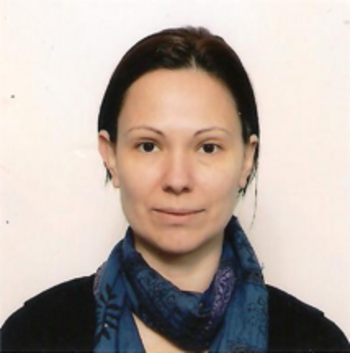
Katarina Ristić is a senior researcher and lecturer at the Global and European Studies Institute at Leipzig University and at the Research Institute Social Cohesion (RISC/FGZ). She works on the intersection of cultural memory studies and Southeast European history with special focus on globalizations, nationalism, and digital cultures. After studying philosophy at the University of Belgrade, she completed her PhD in Southeastern European history at Leipzig University. In her monograph Imaginary Trials, she examines media representations of war crimes trials at the International Criminal Tribunal for the former Yugoslavia (ICTY) across the post-Yugoslav region. Ristić has previously worked as a research associate at Helmut Schmidt University/University of the Federal Armed Forces Hamburg in Hamburg and at the University of Magdeburg in the field of International Security and Conflict Studies. Her work has been published in journals including Memory Studies, International Criminal Justice Review, Journal of Perpetrator Research, Media, War & Conflict. She edited two special issues on NATO Intervention in Kosovo (for Comparative Southeast European Studies, with Elisa Satjukow, 2022) and for Comparative (forthcoming 2026). She is currently working on a monograph on (post)digital memory and transnational far-right.
Félix Krawatzek is a political scientist and, since 2018, a senior researcher at ZOiS, where he coordinates the research cluster Youth and Generational Change. He is also associate editor of the journalCommunist and Post-Communist Studies and co-spokesperson for the Political and Social Sciences Section of the German Association for East European Studies (DGO). Since September 2022, he heads the ERC-funded project Moving Russia(ns): Intergenerational Transmission of Memories Abroad and at Home (MoveMeRU). Félix Krawatzek's research focuses on the comparative analysis of politics in Eastern and Western Europe. He is particularly interested in the role of youth in politics, the significance of historical representation in political processes, and questions related to migration and transnationalism. Before joining ZOiS, Félix Krawatzek was a British Academy Postdoctoral Fellow at the University of Oxford (Department of Politics and International Relations), where he also completed his PhD. From 2018 to 2024, he was an associate member at Nuffield College (University of Oxford). He has been a visiting scholar at Sciences Po Paris and the Minda de Gunzburg Center for European Studies at Harvard University.