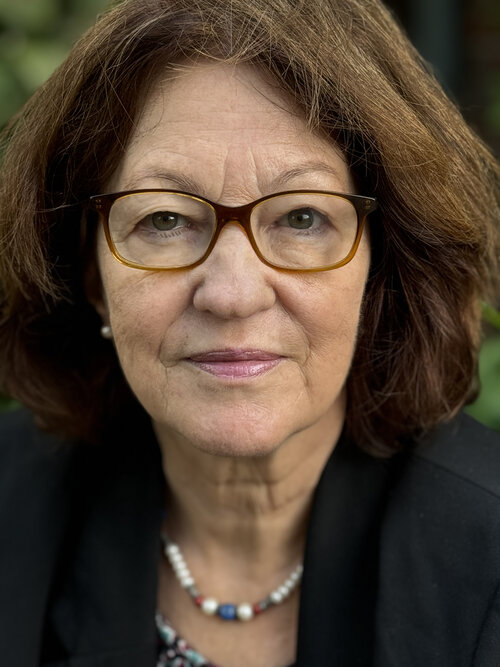
The Berlin Section of RISC is based at the Zentrum für Antisemitismusforschung (ZfA) at the Technische Universität Berlin. Here, expertise from various academic disciplines is brought together to develop a comprehensive understanding of antisemitism and racism. The team is deeply embedded in society, as demonstrated by the diversity of active practice partners in Germany and abroad. We contribute our longstanding expertise to the current debate on antisemitism and to related discussions within RISC.
Contemporary debates on social cohesion often overlook the existence of deeply rooted inequalities. Racism, antisemitism, sexism, and classism have long shaped our society. There is a frequent assumption that an ideal “we” exists. However, from the perspective of groups that have repeatedly experienced exclusion, this notion has never been unproblematic. For these individuals, cohesion has often meant exclusion or nonrecognition. Moreover, cohesion is usually conceptualized within the framework of the nation-state. Global interconnections and alternative forms of cohesion are largely ignored.
The history of antisemitism reveals how dangerous and contradictory cohesion can be. The exclusion of Jews historically served to construct seemingly homogeneous communities – whether religious or national. At the same time, Jewish thinkers developed new ideas about society, diversity, and cohesion that remain relevant today. The Berlin Section of RISC explores both of these trajectories. We examine how ideologies such as racism and antisemitism have functioned historically and continue to shape mechanisms of inclusion and exclusion in the present. We also investigate how the term cohesion is currently used in political discourse. What ideals and assumptions underlie it? Our aim is to make invisible forms of exclusion visible. The RISC team in Berlin works on two levels. We examine current developments in global migration and digital communication. At the same time, we analyze historical developments and draw comparisons across different periods.
For us, transfer means exchange. We work with academic institutions, civil society organizations, and government agencies. Collaborating with practice partners is a particular priority; they are involved in our research projects from the outset. Researchers and practice partners jointly formulate research questions and critically reflect on their work. Together, we identify the target audiences for our research. Our partners include, among others: Stiftung Erinnerung, Verantwortung und Zukunft; Bildungsstätte Anne Frank; Rosa-Luxemburg-Stiftung; Center on Extremism of the Anti-Defamation League (ADL); and Humanistischer Verband. In addition, we work with specific partners on individual projects, such as the Kali-Bergbaumuseum Bischofferode and the Schwules Museum Berlin.