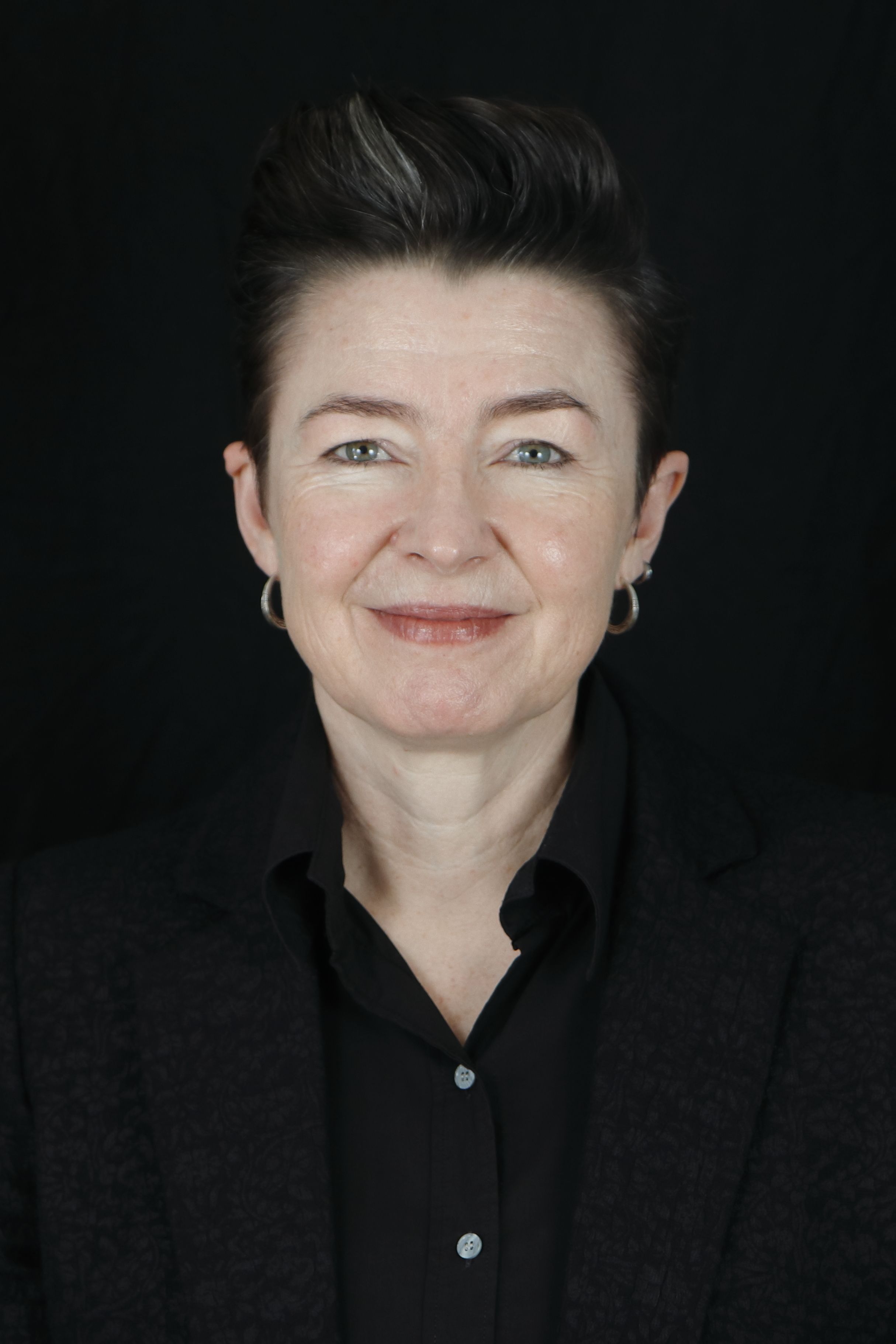
Christi van der Westhuizen, who is currently fellow at the Research Institute Social Cohesion, is Professor of Sociology at the University of the Western Cape in South Africa. In this interview, she discusses everyday practices of social cohesion, resistance to polarisation, and how communities can build trust across social divides.
Your research focuses on how people navigate diversity in their everyday lives. What sparked your interest in looking at the ways people manage to “live together well”?
I have made an intensive study over many years of the historical factors and forces that gave rise to oppressive colonial structures and systems in South Africa, particularly in the form of apartheid. I have also studied the transition from apartheid and the attempts to build a democratic South Africa and what the possibilities are for the full inclusion and affirmation of previously dehumanised people.
I have written two monographs, White Power and the Rise and Fall of the National Party and Sitting Pretty: White Afrikaans Women in Postapartheid South Africa, and have edited several volumes, including the Routledge Handbook of Critical Studies in Whiteness. Most recently with colleagues here at Leipzig University, Dr Constanze Blum and Prof Dr Ulf Engel, we have brought out the Routledge Handbook of Social Cohesion in Africa. I also have other books out like the D Word – Perspectives on Democracy in Tumultuous Times and also several journal articles that look at all of these historical phenomena.
My focus has been on the level of structure and of the individual, or subject, in making sense of how people as historical agents become convinced by certain ideologies and how they wield difference in oppressive ways that are destructive to human relations. But people also do the opposite: they agitate and form movements to fight for justice and to fight for the acknowledgement of themselves as full human beings.
During my time as visiting professor here at Leipzig University in 2022, I met Prof Lori Beaman from the University of Ottawa, and we spoke at length about how people are resisting attempts at polarisation. Lori has developed the concept of ‘deep equality’, which refers to everyday practices of living together well. In South Africa, we have concepts such as non-racialism, ubuntu and reconciliation that are about interconnectedness and mutual recognition of humanity. They involve processes and practices of connecting with one another and to finding solutions together to solve common problems. This led me to initiate a successful grant application to the Trans-Atlantic Platform, titled ‘Repairing Sociality, Safeguarding Democracy’ or Social Repair research consortium, with me as Lead Principal Investigator. My co-investigators are Prof Beaman (University of Ottawa), Prof Bheki Mngomezulu (Nelson Mandela University, Prof Thabisani Ndlovu (Walter Sisulu University), Prof Paula Montero (State University of São Paulo) and Prof Lella Nouri (Swansea University).
Much of the current debate focuses on polarisation, social conflict and democratic backsliding. Why do you think it is equally important to study cooperation and everyday practices of living together?
As we know, power configures all human relations. The current global surge in politics of polarisation is very much about restoring power structures that reinstate old hierarchies of gender, sexuality, race, ethnicity and nationality that are oppressive and that deny certain people their full humanity. My interest is not only in the processes of how oppressive structures are created but also how people are resisting oppression. Here I am following thinkers such as Judith Butler, Ernesto Laclau and Michel Foucault that theorise that power is never simply a question of imposition. It always involves a decision of acquiescence or resistance. Therefore, whenever power is exercised, power can also be resisted. Through the concepts of non-racialism, ubuntu and reconciliation, South Africans have found ways to bridge processes of colonial othering, as Mahmood Mamdani, the Ugandan scholar, has written.
Of course, we have struggled intensely and you can see how old habits of mind re-emerge. Institutionalised racism like apartheid inducted people into racialising ways of thinking. So, with Afrophobia, we see a situation in which South Africans are reverting back to what they’ve become used to under apartheid. It is a pernicious mix of racism and xenophobia in which African people discriminate actively against other African people. As I’ve argued in an article for the journal Comparativ, Afrophobia is a continuation of the racial logic of apartheid.
Xenophobia, including Afrophobia, is worldwide about cultural forms of politics where elites are trying to convince people that the problem is that your way of being and doing in the world is threatened by foreigners. That is why you are struggling to get along, and why life feels harder. We see the phenomenon of livelihood possibilities being worse for younger generations now than they are for older generations so that people will not have the same standard of living as their parents and grandparents. Political elites are trying to convince people that it is due to cultural elements of life but in fact it is about a particularly destructive form of capitalism. Neoliberal capitalism has moved to an openly authoritarian stage, buttressed by fascist politics, to concentrate wealth and power in the hands of a mere fraction of the notorious ‘one percent’. Capital has been forced upward, away from the lower echelons of society. Particularly middle-class people are feeling the pressure. But this also creates the opportunity for new forms of politics.
Your project asks how local, everyday practices might contribute to strengthening democracy and building trust. Can you give us an example of what such practices might look like?
In South Africa we’ve seen the general deterioration in the state through misgovernance and corruption by the party that has ruled the country since 1994, the African National Congress. It has had destructive effects in the form of the deterioration of infrastructure, with consequences for example of health risks, such as cholera reoccurring in certain areas because water infrastructure is no longer working properly. Raw sewage is going into drinking water across the country. South Africa also went through several years of rolling blackouts where electricity was no longer available. In many places, there are still constant outages. These have knock-on effects on electricity infrastructure that is old and not being maintained and on other related infrastructure, including water yet again. Water supply and sanitation are dependent on working electricity for pumps at wastewater plants. Communities at local level have had to find ways to work together to step into the vacuum that has been left by the state. At local government level, we have seen the start of the possibility of cross-racial and cross-class collaborations to address these challenging problems.
We’ve had the problem of the persistence of apartheid geographies. People were racially segregated under apartheid. Today, while the formerly white middleclass areas have become more integrated, the poor areas remain predominantly black. But what democracy has failed to overcome, state deterioration may assist with. You cannot stay in your apartheid bubble if services and infrastructure are collapsing around you. This is creating the opportunity for people to work together. Many locally based initiatives have been formed where people come together across racial and class divides to fix infrastructure and make their communities better places to live in. In the process, collaborations and interconnections are taking place that did not exist before. This is what we are investigating in the South African study. We will compare this with the findings of the research of the rest of the Social Repair case studies in Canada, Brazil and the UK.
What are you hoping to explore during your time as a fellow at the Research Institute Social Cohesion, and what are you particularly looking forward to exchanging with researchers here?
I am specifically looking forward to delivering my fellow talk at RICS’s annual conference, during which I will present some of my latest research findings and open them up for discussion. During my visit, along with Dr Blum and Prof Dr Engel, my co-editors of the Routledge Handbook of Social Cohesion in Africa, we have launched the book at Basel University at the Swiss and German African Studies associations’ joint conference. That took place at the end of August. We also had a launch of the handbook at the African Studies Association of the UK, which took place at Durham University earlier in September. The book has so far been very well received. Our Routledge handbook looks at social cohesion through African epistemologies, and in the form of policies, institutions, processes and practices. We’re excited about how we, along with our 50-plus contributing authors, are widening the lens on social cohesion beyond Western conceptions.
Thank you very much for your time! We wish you a successful stay here in Leipzig!
- More information on the Social Repair project
- More information on the Routledge Handbook of Social Cohesion in Africa
- More information on the RISC Fellow Program
Christi van der Westhuizen’s presentation at the RISC annual conference will take place on September 17, 2026, from 6:00 to 7:00 p.m. (in English). The livestream will be broadcast on YouTube.